The 'AI-First CMS' Myth: Why you should ignore the buzzword
Vendors love calling their platforms 'AI-First,' but this label rarely means anything meaningful. Here’s a technical breakdown of what’s real, what’s fluff, and how to evaluate AI integration on architectural merit.

- 1Cutting Through the Marketing Fluff to Find Real Technical Value
- 2What “AI-First” Usually Means Behind the Marketing
- 3Where AI Actually Adds Real Technical Value
- 41. Automated Metadata and Taxonomy
- 52. Intelligent Asset Management
- 63. AI-Assisted Localization
- 74. Predictive Personalization
- 85. Technical SEO Optimization
- 9The Hidden Costs of “AI-First” Posturing
- 10A Better Question: AI-Optimized, Not AI-First
- 11The Bottom Line for Technical Leaders
- 12The Takeaway: Build Foundations, Not Facades
Cutting Through the Marketing Fluff to Find Real Technical Value
Many enterprise software vendors today claim to be building an AI-First CMS. It’s a compelling pitch designed to obscure a mediocre architectural reality.
The uncomfortable truth? “AI-First” is a hollow marketing shell.
Before evaluating feature lists, remember that “AI-First” is often a marketing-led veneer. If the underlying content model is still a rigid monolith, no amount of LLM integration will solve your core scalability issues.
In most implementations, it doesn’t denote a new architecture or a novel data layer. It is a calculated distraction, a way to repackage legacy tech by bolting a few LLM API calls into the rich-text editor and calling it innovation.
For technical executives, this kind of superficial positioning is a red flag. The question worth asking isn’t who uses AI? It’s where does AI actually make architectural or operational sense?
What “AI-First” Usually Means Behind the Marketing
In practical terms, “AI-First” CMS platforms follow the same three-tier architecture we’ve seen for decades.
- A content repository, your structured data store.
- A delivery layer, API or headless interface.
- An authoring UI with some AI-related buttons sprinkled in.
Those buttons typically wrap calls to third-party APIs such as OpenAI, Gemini, or Claude, offering basic functions like:
- Generate headline
- Summarize article
- Create SEO tags
- Rewrite in a different tone
That is not a re-architecture. It is an aesthetic layer of “workflow sugar” designed to justify enterprise price hikes.
The CMS was not rebuilt; it was decorated. Behind the “AI” labels, you are still dealing with a legacy monolith augmented by superficial API calls. Resist the pressure to pay a performance or licensing premium for functionality that often already exists as a free browser extension or a simple script.
Where AI Actually Adds Real Technical Value
Used correctly, AI can serve as a force multiplier in content-heavy ecosystems. Here’s where the signal outweighs the noise.
1. Automated Metadata and Taxonomy
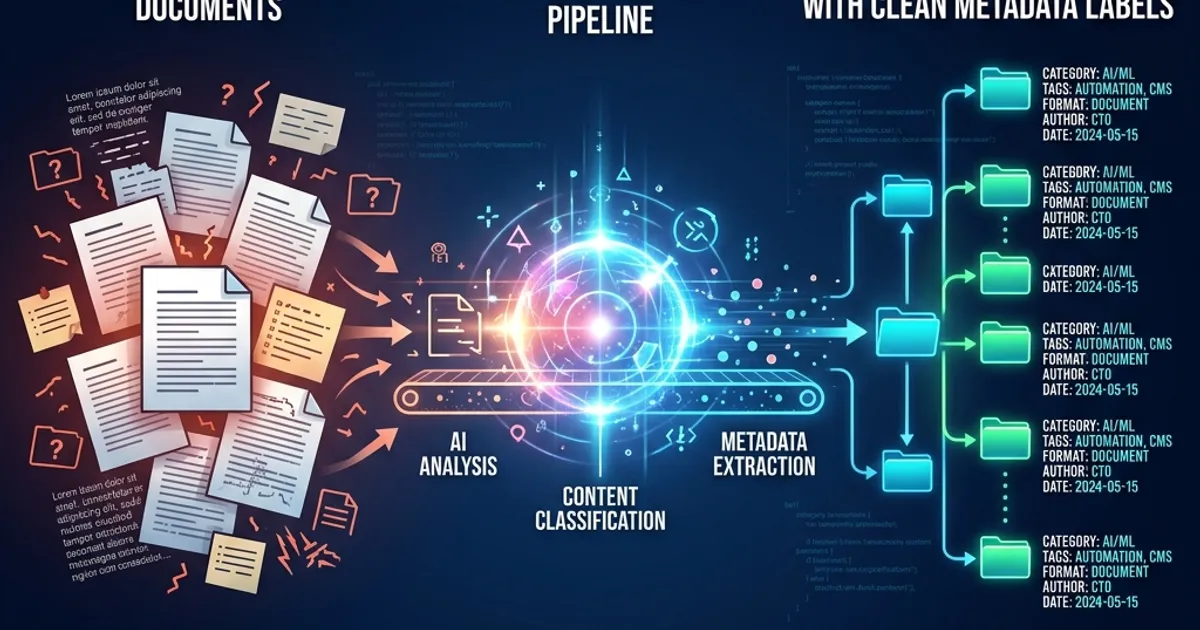 AI-driven content classification models can automatically tag assets, clean metadata, and enforce taxonomy consistency across repositories.
- Legacy Content Migration: Automatically mapping thousands of unstructured legacy articles into a strict, unified headless CMS schema via LLM-based categorization.
- Dynamic Topic Clustering: Grouping loosely related support articles together automatically to feed semantic search engines and vector databases.
The Impact: Radically improves GraphQL query performance, personalization accuracy, and strict content governance without manual editorial overhead.
2. Intelligent Asset Management
 Computer vision integrated with an external DAM (or directly within your CMS’s internal media library) can identify subjects, extract contextual information, and generate accurate alt text for both external and native assets.
- Brand Safety Screening: Automatically flagging user-generated content or incoming agency assets that violate corporate brand guidelines before they hit your CDN.
- Automated Focal Cropping: Identifying the most important subject in an image to dynamically generate art-directed crops for mobile, tablet, and desktop without losing context (if your CMS natively handles that option).
- Heavy Media Offloading: Intelligently delegating raw, oversized video and picture assets to specialized DAM infrastructure, or using optimization pipelines to automatically generate and serve lightweight variants (like WebP/AVIF) without bloating the core CMS repository.
The Impact: Turns your media library into a true semantic search index (e.g., retrieving “CEO at a product launch” instantly) and ensures automated accessibility compliance.
If your AI pipeline generates high-resolution assets directly into an internal library, ensure it is strictly configured to produce web-optimized variants (WebP, AVIF) at appropriate scales. An integration that floods your repository with multi-megabyte source files without an automated compression layer is a performance liability, not an architectural feature.
3. AI-Assisted Localization
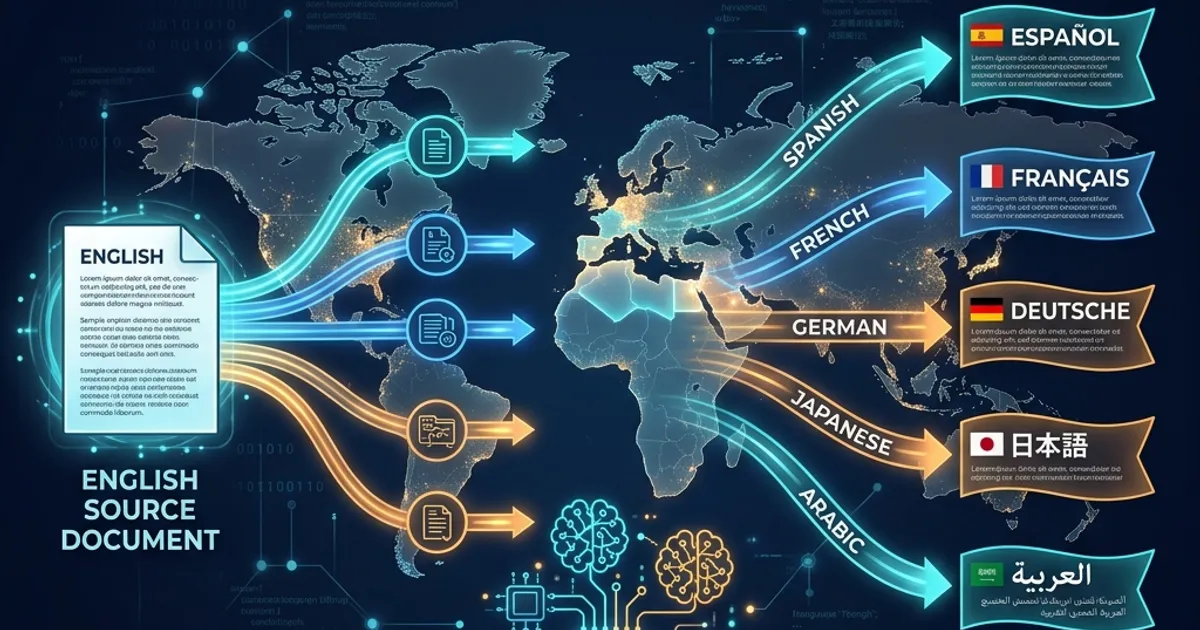 Machine translation models now deliver near-human fluency. When integrated properly into a continuous localization pipeline, AI manages the heavy lifting while humans handle final editorial review.
- Context-Aware Glossary Enforcement: Ensuring that highly technical industry terms or branded product names are never mistranslated by localized teams.
- Automated Tone Adaptation: Adjusting the localized copy to match regional cultural nuances (e.g., making a German translation slightly more formal than the US English source).
The Impact: Cuts translation turnaround times by 70 to 80 percent, allowing enterprise brands to deploy global campaigns in days instead of weeks.
4. Predictive Personalization
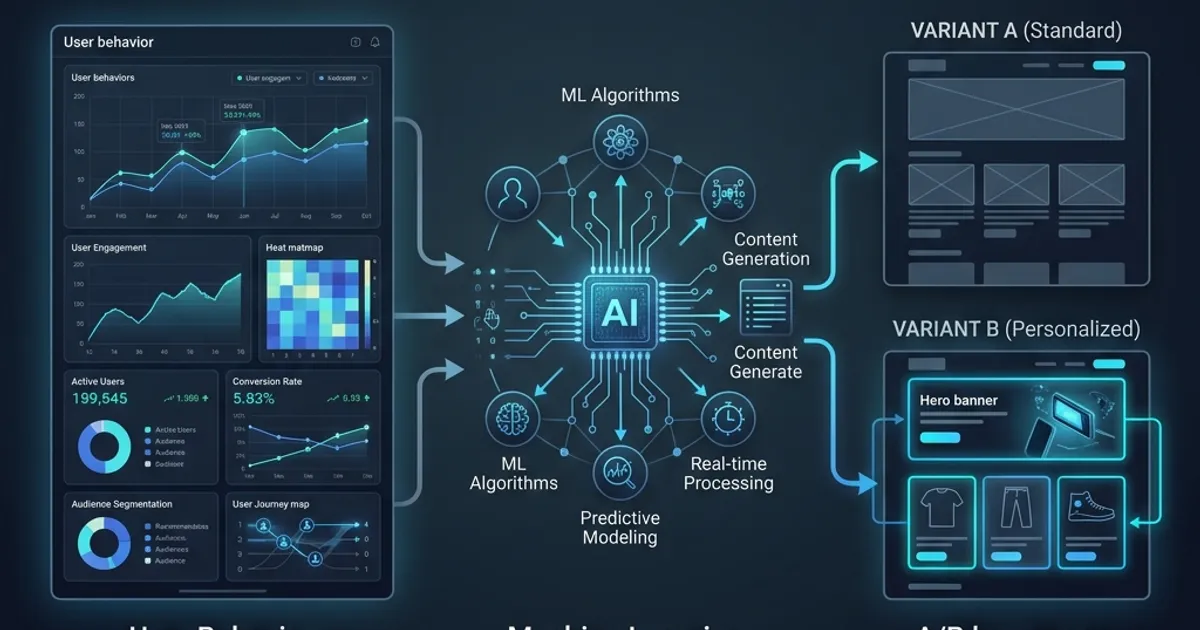 AI models trained on behavioral data can dynamically tailor content delivery via your headless APIs. When backed by a robust data layer such as a modern CDP or analytics pipeline, this moves beyond static rules engines.
- Next-Best-Action Routing: Analyzing an anonymous user’s clickstream across multiple pages to dynamically push them toward a demo request rather than a whitepaper download.
- Churn Prevention Pipeline: Recognizing behavioral risk signals from logged-in portal users and automatically surfacing targeted technical support content before they submit a ticket.
The Impact: Creates measurable engagement lift and conversion rate optimization (CRO) without requiring authors to manually build hundreds of discrete page variants.
5. Technical SEO Optimization
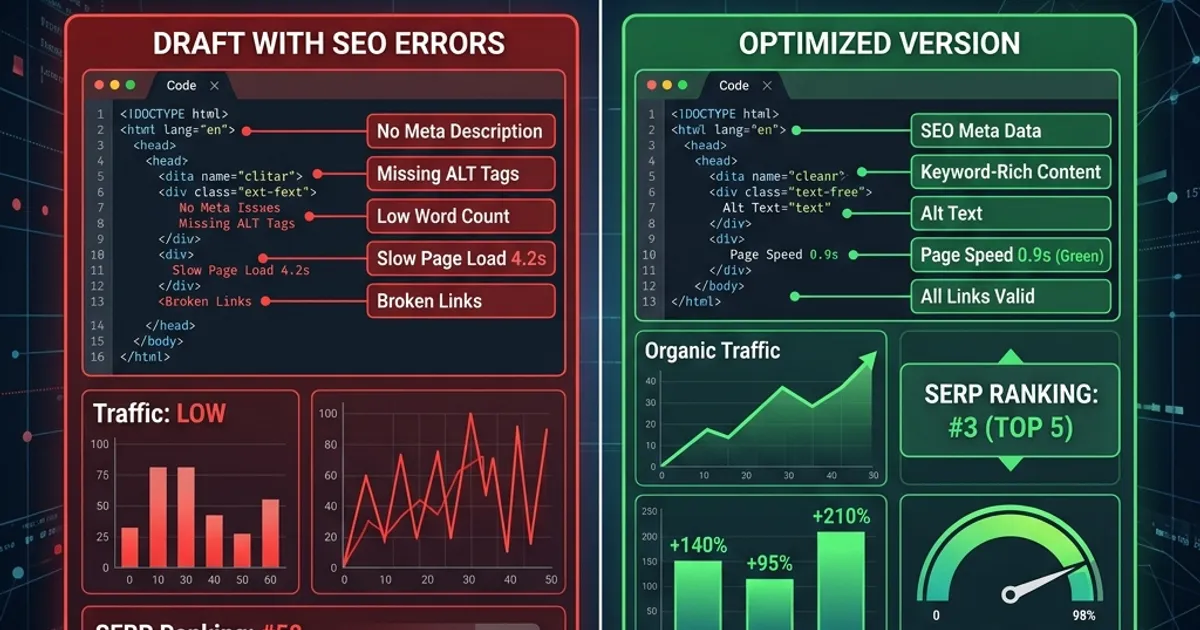 AI can benchmark live drafts against search trends, recommend keyword inclusion, refine heading structures, and generate precise meta descriptions programmatically.
- Orphan Page Mitigation: Automatically scanning the content graph to recommend internal linking opportunities, ensuring no valuable posts fall out of the site architecture.
- Content Gap Analysis: Comparing a drafted product page against top-ranking SERP competitors in real-time to highlight missing topics or missing structured data markup (JSON-LD).
The Impact: Shifts SEO from a reactive, post-publishing chore into a proactive, built-in pipeline step that produces measurable gains in organic SERP rankings.
The Hidden Costs of “AI-First” Posturing
For strategic decision-makers, hype carries real operational risk. Here’s what many “AI-First” pitches omit:
- The AI Tax: Inference calls require compute resources. Vendors pass those costs to you, often inside opaque “AI-tier” licenses.
- Vendor Lock-In: Most CMS products inject external AI APIs directly into authoring flows, tying your content processes to third-party ecosystems.
- Performance Overhead: Each LLM call adds latency and unpredictability. Without proper queue management, publishing speed drops.
- Compliance Exposure: Sending content to external inference endpoints can compromise compliance if not properly redacted.
- Interface Bloat: Extra AI widgets clutter the UI and undermine usability, making authoring harder, not smarter.
The “AI Tax” and compliance exposure are not just line items; they are architectural liabilities. Failing to redact sensitive content or manage hidden inference costs can result in massive unbudgeted expenses and enterprise-level legal risk.
Blindly pivoting to “AI-First” without architectural scrutiny is an expensive gamble. It risks compromising data security and engineering stability; it is a chase for a marketing trend that most vendors haven’t actually engineered for. It’s not innovation; it’s a liability shift.
A Better Question: AI-Optimized, Not AI-First
Instead of chasing labels, technology leaders should focus on AI-Optimized architectures, where AI augments workflows without defining them.
Prioritize AI-Optimized architectures where AI is a modular, swappable service rather than a hardcoded dependency. This preserves your architectural freedom and allows you to upgrade your AI engine as the market evolves without migrating your entire content repository.
That means:
- Decoupled services that allow modular updates to AI logic.
- Clear prompt hygiene and reproducibility for editorial control.
- Robust governance layers and traceable audit trails.
- KPIs focused on business impact, not feature count.
AI should enhance the CMS’s value chain, not dominate it with vague branding.
The Bottom Line for Technical Leaders
“AI-First” is often an empty signifier, a strategic distraction that prioritizes marketing velocity over long-term architectural stability. Don’t let the shine of a new feature set blind you to the underlying engineering debt it might be masking. The presence of AI-generated content buttons does not make a CMS innovative; structural integrity, scalability, and interoperability do.
If you are currently assessing CMS vendors:
- Look past the UI: Demand visibility into how their AI is actually embedded, governed, and costed.
- Watch the margins: Require strict cost-modeling before enabling any inference-heavy functionality.
- Demand evidence: Evaluate real gains in throughput and compliance, rather than accepting slideware promises.
Ultimately, the best CMS is the one that forces AI to work for your infrastructure, not the other way around.
The Takeaway: Build Foundations, Not Facades
AI can accelerate workflows and enhance content intelligence, but the “AI-First” label remains a distraction. It is a marketing shortcut for “we added an AI button somewhere.”
Don’t buy the rhetoric. Buy solid architecture.
Master Architecture, Not Buzzwords
Is your CMS vendor pushing fluff or real value? Gladtek helps technology leaders identify real ROI through architectural audits, CMS migrations, and modernization roadmaps. Let's ensure your foundation is actually ready for the future.